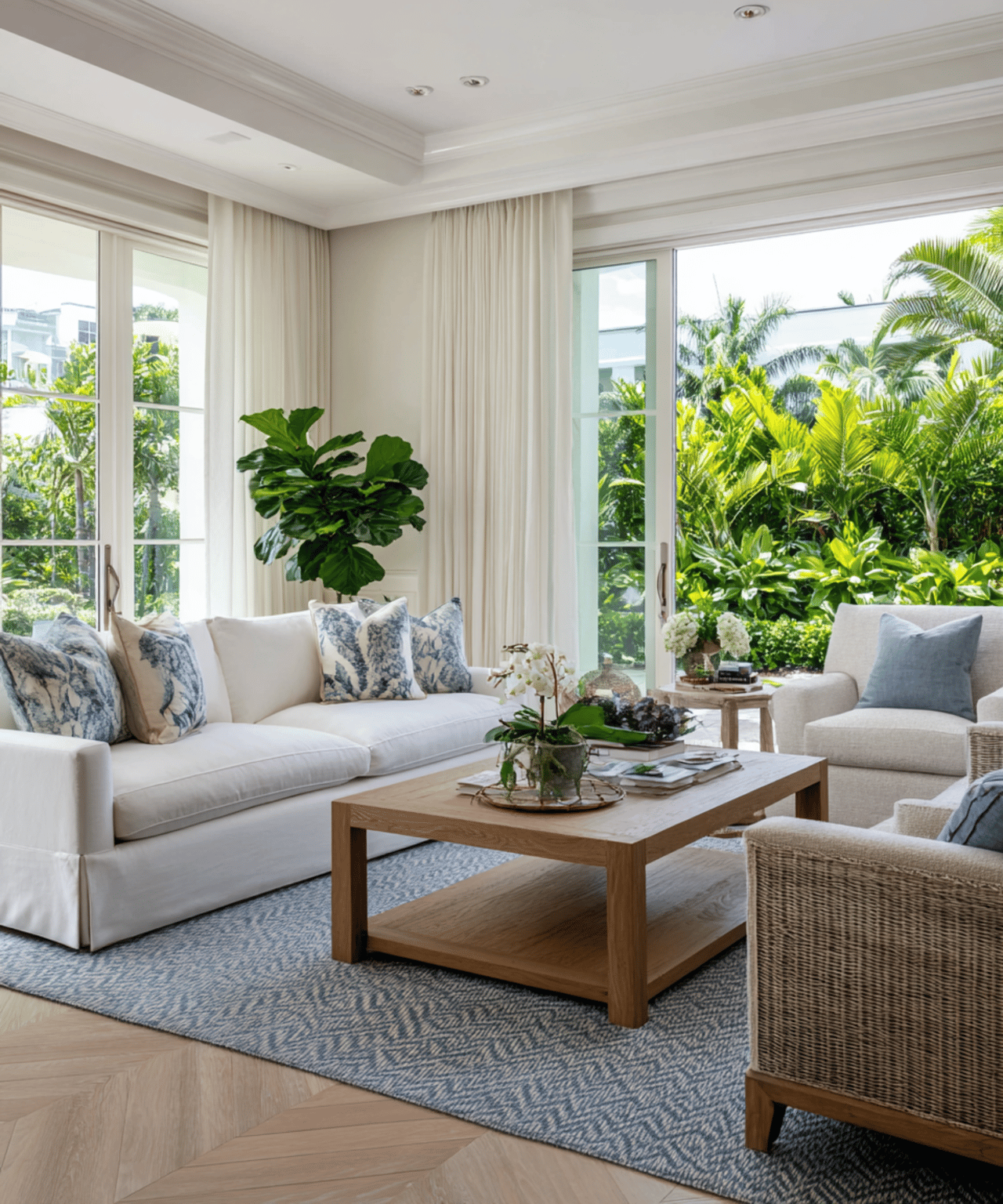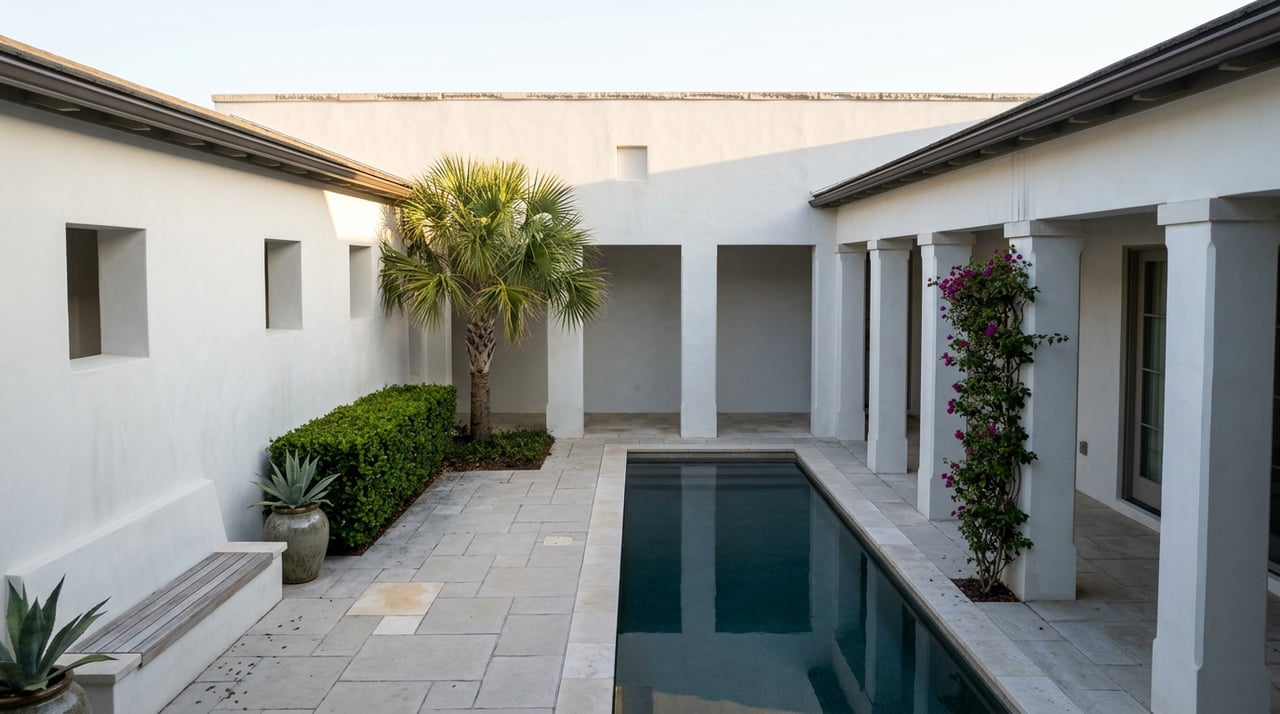
Compare listing prices along 30A and Alys Beach will sit near the top of every chart. What the price per square foot doesn't show is the other number that actually determines how you'll live there: how long you wait, and who has to say yes, before you can change anything visible from the street.
That number is real. A buyer closing on a homesite in Alys Beach isn't just purchasing land inside a pretty town. They're entering a permission system, one with a specific origin, two specific people at the top of it, and a specific amount of time attached to every request that comes after closing.
The code has two authors, and they still sign off on everything
Alys Beach was platted in 2004 by the Stephens family, developed through EBSCO Industries, and master planned by Andrés Duany and Galina Tachieva of DPZ CoDesign, the same firm that had already designed Seaside and Rosemary Beach along the same stretch of highway. What DPZ handed off wasn't a style guide. It was a form-based Design Code, and the town hired two architects, Marieanne Khoury-Vogt and Erik Vogt of Khoury Vogt Architects, to enforce it in person, indefinitely, as the town's standing Town Architects.
That distinction matters more than it sounds. Most 30A communities run architectural review through a volunteer board or a rotating committee drawn from residents. Alys Beach runs it through two named professionals who have held the role since the town's earliest homes went up, reviewing massing, roofline, window proportion, material, and color against the same code, submission after submission, for two decades. Khoury-Vogt has described the constraint in her own words: working inside the tight code, she said, "forces you to be more disciplined and to stretch your creative juices." That's a design philosophy. It's also a description of a gate you'll need to pass through before a contractor can touch the exterior of your home.
What the review actually costs you in time
The code covers what you'd expect: exterior materials, roof form, window and door proportions, landscaping, lighting, fencing, and how a structure sits on its lot. What it costs is the part buyers underestimate.
Published guidance for how the review moves puts a conceptual round of comments at two to four weeks, a first board review at another two to six weeks once a submission is complete, and two to eight more weeks of revisions before final sign-off. None of that includes Walton County permitting, which runs on its own separate timeline and can't start meaningfully until the design side is settled. For a full custom build, real-world planning windows commonly stretch several months for design review alone, before a permit is even pulled.
That stacking is the part a buyer comparing towns on 30A needs to understand. A design-controlled community with a lighter review, like the ARC processes typical of many neighboring New Urbanist towns, still asks for approval. Alys Beach asks for approval on a narrower set of allowed choices, reviewed by the same two people every time, on a timeline measured in months rather than weeks. If your plan is to close on a homesite and start moving toward a build date, the review clock is a line item on your project schedule whether it appears on the settlement statement or not.
The approved builder list, and why it outlasts your closing
Alys Beach also limits who can build there. Construction runs through an approved roster of builders experienced in the reinforced-masonry methods the code requires, and any architect working in the town is expected to coordinate with KVA to keep new work aligned with the existing code. That requirement doesn't expire when your house is finished. It follows the property.
Buy a completed resale home in Alys Beach and you inherit the same review structure for anything you want to change later. Local buyer guides describe recurring categories the review commonly declines: substitute paving colors outside the approved palette, added exterior light fixtures beyond what the code specifies, and landscaping choices that fall outside the approved plant list. None of that is arbitrary. It's the same mechanism that produced the calm, unbroken white streetscape that made you want the house in the first place. It just means the mechanism doesn't turn off at closing.
FORTIFIED isn't a marketing line, it's a construction mandate
One more piece of the code is worth separating out because it affects your ownership costs directly, not just your renovation timeline. Alys Beach requires every home in the town to meet the FORTIFIED for Safer Living standard, a wind and water resistance certification developed by the Insurance Institute for Business and Home Safety. According to the town's own materials, Alys Beach was the first community anywhere to require the certification across an entire town, not just for individual homes seeking a discount.
That requirement is baked into the reinforced-masonry construction the approved builders already use. It's also part of why buyer guides consistently describe Alys Beach as carrying a different insurance profile than comparable wood-frame construction elsewhere on the corridor. The exact premium a given home pays depends on coverage, carrier, and claims history, so it isn't a number worth generalizing here. What's worth knowing before you shop is that the construction standard behind the white walls is doing real work on your insurance bill, not just your curb appeal.
Where design control gets tighter versus looser on 30A
Every established 30A town enforces some form of architectural review. What varies is how much room the code leaves for individual choice, and how the review is staffed. Buyer guides across the corridor describe Alys Beach's version as more prescriptive than the review processes at neighboring communities like WaterColor, Watersound, Seaside, and Rosemary Beach, largely because the Alys code narrows exterior color, material, and landscape choices to a defined palette rather than a broader set of guidelines, and because the same two town architects personally review every submission rather than a rotating volunteer board.
For a buyer this isn't a ranking of which town is better. It's a variable that should sit next to price per square foot when you're comparing two homes that look similar on paper. A homesite that costs less in a neighboring town but leaves you more design latitude may cost less overall once you account for a faster path to occupancy. A finished Alys Beach home may cost more up front but arrive with the review question already settled by the previous owner's approved plans.
What to request before you write an offer
Whether you're buying a homesite or a finished home, the documents that actually answer your questions live outside the listing sheet.
- The recorded Declaration, current Design Guidelines, and any ARB submission checklist in effect today, since guidelines are amended over time
- For a resale home, any existing ARB approvals and as-built plans on file, so you know what's already sanctioned if you plan future changes
- FORTIFIED certification records for the specific home, not just a general statement that the town requires it
- The Alys Beach Neighborhood Association's current budget, reserve study, and any special assessment history
- Written confirmation of the capital contribution and any other transaction-based fees tied to closing, since these appear in closing documents rather than on the listing itself
None of these documents are hidden. They simply don't show up until someone asks for them, and the review timeline embedded in the Design Guidelines is the single most common surprise for buyers who assumed a renovation would move at the same pace it would anywhere else on the coast.
Frequently asked questions
Does the review apply if I'm only buying a finished home and don't plan to change anything? The review only activates when you submit a request for an exterior change. If you buy a home as-is and never touch the exterior, you won't interact with the Architectural Review process directly, though the same rules govern any future owner, including a buyer from you.
Do smaller requests, like a new light fixture, still go through the full review? Exterior lighting, landscaping changes, and other visible modifications typically require approval, even when they seem minor. The code treats visibility from the public realm as the trigger, not the size of the project.
Who has final authority, the Neighborhood Association board or the Town Architects? The Alys Beach Neighborhood Association administers the community under its recorded covenants, while design review specifically runs through the Town Architects and the Architectural Review process they oversee. Buyers should request current governing documents to confirm how authority is structured today.
Does the approved builder requirement apply to small repairs too? The approved builder roster is generally tied to construction and renovation work rather than routine maintenance, but any project affecting the exterior should be confirmed against current requirements before work begins.
A design code this specific isn't a reason to avoid Alys Beach. For plenty of buyers, the predictability is the entire point of paying the premium. But predictability only works in your favor if you understand the mechanism before you're inside it, not after a submission comes back with a request for revisions three months into your renovation.
If you're weighing an Alys Beach purchase against another 30A community, or trying to time a build around the review calendar, Andre Dominick and Theresa Felton can walk through the current Design Guidelines, pull the documentation on a specific property, and help you build a realistic timeline before you write an offer. Let's talk.